It’s normal to expect cuts, blisters, or sores to heal themselves. Our bodies are able to recover themselves with the slightest amount of attention and cleaning. But if a wound won’t heal after four to six weeks, or if it starts looking worse redder, swollen, leaking fluid, or giving off a bad smell that’s a clear sign something deeper is going on. A minor sore may turn into a leg or foot wound that’s not healing. If it’s not treated the wound could cause severe complications and even an amputation.
If you’ve been putting off getting help for an injury that isn’t healing, it could be time to quit waiting and seek out help.
Why do some wounds not heal?
Knowing why a cut doesn’t heal can help you and your physician determine the most effective treatment.
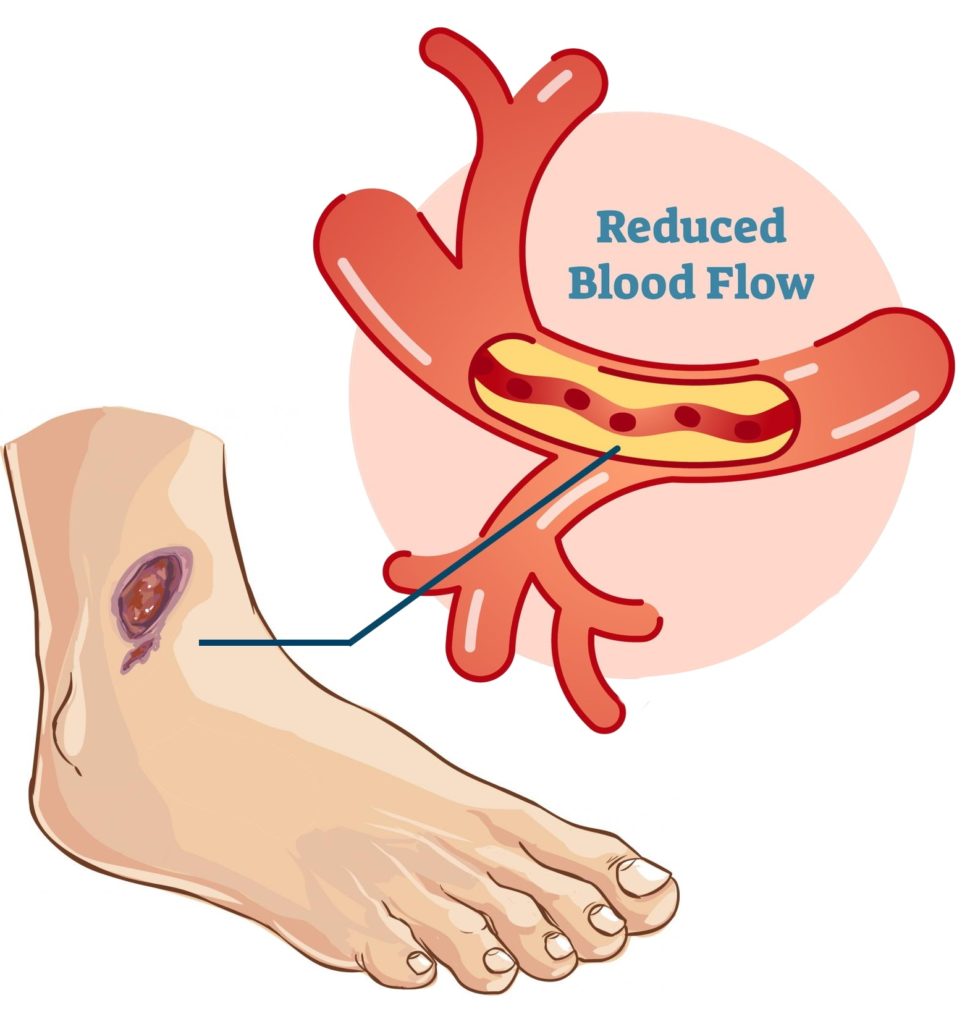
First, if you’ve got diabetes, you’re at an increased likelihood of developing leg and foot wounds that aren’t healed well. The high blood glucose levels could cause nerve damage and alter the way it heals so that you do not feel the pain. They also hinder blood flow.
Another major cause is poor circulation, usually related to venous or arterial ulcers. If your arteries, veins or vessels aren’t working, your blood isn’t delivering enough oxygen and nutrients to improve your skin.
There is also the possibility of developing bedsores (pressure ulcers) when you suffer from mobility problems. They are a different type of wounds that can be very stubborn if they are not properly treated.
The healing process can be hindered by other factors that can cause it, such as age, certain medications an autoimmune disease, or poor nutrition. Sometimes it’s the combination of these conditions that cause the wound stay.
How long does healing normally take? What happens if it does not happen?
It’s normal to wonder about the length of time healing “should take”. In reality, the amount of time needed to heal is contingent on your overall health and the kind of cut. Small cuts or blisters may heal in a couple of weeks. If you’ve got an ulcer that won’t heal or a leg wound which isn’t healing, it can be 12 weeks.
It’s imperative to act quickly if there is no improvement within 4 to 6 weeks. You should consult an expert on wound care. The longer a wound remains open the greater the risk.
You deserve to find the right help
If the sore doesn’t heal, it’s not just “bad luck” or a reason to not pay attention to your body is trying to tell you it requires help. The good news? There are specialists and treatments that can make a huge difference. Our clinic treats unhealing foot wounds and leg ulcers. We collaborate with other medical professionals to design a personalized plan that will help heal your body.
You can find solutions for high-end wound dressings, blood flow repair and even hyperbaric treatment. We’ll be with you at every step, because we believe that no one should need to face an injury that won’t heal.
Final Thoughts
A wound that doesn’t heal will affect you in more ways than one. It could change your life. There is hope. Do not be afraid to seek help if you are tired of dealing the pain of a leg ulcer that will not heal or heal, or a sore that is persistent, or a painful foot wound that’s not healing. If you get help as soon as possible the better chance you have to be back to living the life you deserve without the constant anxiety and pain of a painful wound.