In the midst of modern manufacturing, robotic arms are revolutionizing the rules of production, blending accuracy, safety, and efficiency in ways that were impossible to imagine. These marvels of the mechanical realm, commonly referred to as robot arms, have become indispensable in industries worldwide driven by the urgent necessity to cut operating costs while ensuring high standards of quality. Integrating robotic arms into production lines allows companies to not only reduce costs, but also increase worker safety and efficiency. We’ll investigate how these groundbreaking machines reshape the industrial landscape.
The principal reason behind the rapid growth in robotic arm use is cost-efficiency. Factories have to constantly work to minimize manufacturing errors, cut down on the amount of waste and reduce work-related accidents. A robotic arm tackles these issues. Robots help avoid costly mistakes and minimize the use of raw materials, through performing repetitive tasks more precisely than human beings. For instance, in high-volume industries like automotive manufacturing, robotic arms are able to perform precise welding and part positioning and ensure flawless assembly each time. This can lead to significant savings as less defective products mean less rework or waste.
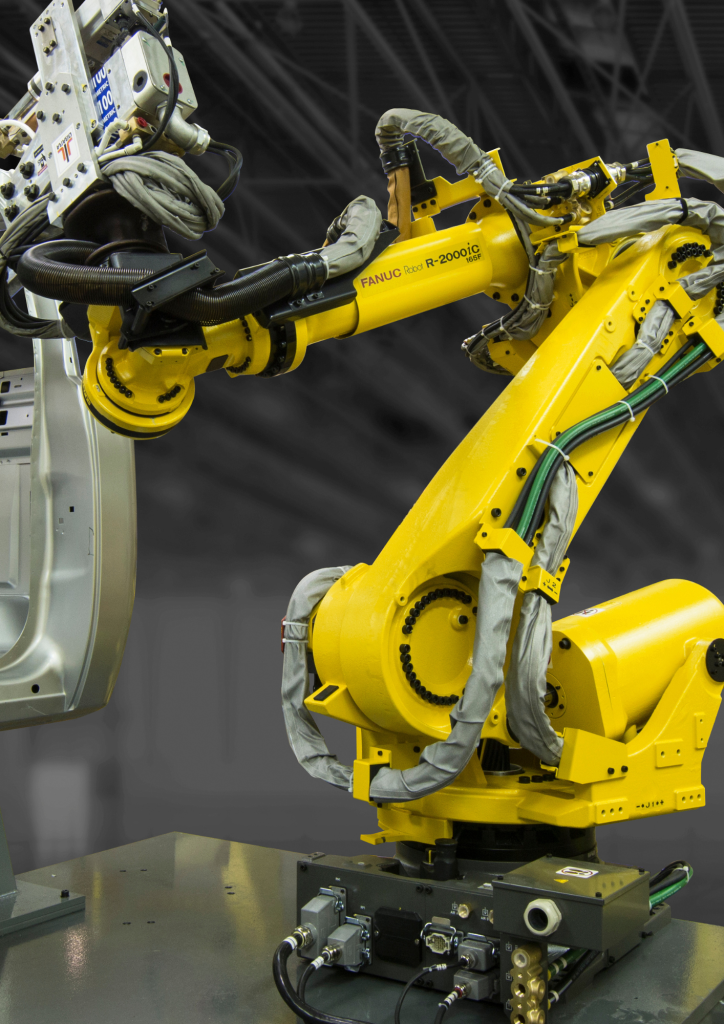
Image credit: automatedsolutions.com.au
The security of robotic arms is also an important element. Human workers are in danger in the course of performing a variety of manufacturing tasks, like handling hazardous material or operating large machinery. By using robot arms companies can remove employees from hazardous environments, significantly cutting the possibility of workplace injuries. A robotic arm, designed as a kinematic chain of movable joints, mimics the functionality of a human arm but operates without the risk of physical harm. These machines are equipped with robotic hands or programmable end-effectors. They can be used for tasks like grasping spinning, and welding in conditions that are unsafe for humans.
The range of applications for robot arms is an exciting development in a variety of industries. Robot arms are able to be used for various tasks, ranging from automotive assembly to electronic production. They are programmable, which allows them to execute complex tasks like tending machines or painting, as well as fiberglass applications, with a remarkable quality and consistency. Robotic arms in warehousing have revolutionized palletizing through the automation of loading of products onto pallets. Automation not only increases efficiency but also increases reliability since robot arms can work without tiring.
Cobots are an entirely new breed of robots that work alongside humans. Cobots with robotic arms unlike conventional industrial robots that are kept in isolated cells, are specifically designed to work with humans in a safe and efficiently. Cobots with robotic arms can be used to complete difficult or repetitive lifting tasks in a factory which allows human workers to focus on more challenging duties. This collaboration enhances productivity and ensures a safe work environment, as cobots are programed to stop or modify their movement if someone is nearby.
The effect of robotic arms extends beyond safety and efficiency, into the very foundation of manufacturing today. The ability of robotic arms to carry out tasks like welding or assembly, as well as material handling with extreme precision has made them indispensable in high-stakes industries. Robotic arms, for instance, can be used to rotate and move parts during assembly in the automotive industry, ensuring that they are aligned perfectly without any human involvement. Robots are also utilized in electronic devices to handle fragile components. This prevents damage and increases output quality.
Robotic arms are expected to increase in importance as industries change. They are a cornerstone for manufacturing’s future due to their capacity to lower costs, enhance security and adapt to various tasks. By combining cutting-edge technology with human ingenuity, robot arms are more than just instruments. They’re partners who drive the pace of innovation and are changing how we design our environment.